


Radeon RX 7900 GRE
AMD Radeon RX 7900 GRE Graphics Cards
The graphics card for gamers and creators
With these words, AMD introduces the product page of the Radeon RX 7900 GRE. The graphics card has been officially available since 27 February 2024. The Radeon RX 7900 GRE is one of AMD's gaming flagships and holds its own in this segment against the competition. The Navi 31 XL graphics chip of the RX 7900 GRE is based on the RDNA3 GPU architecture and is manufactured using a 5 nm process. In addition to various gaming technologies, the biggest innovation compared to the second Navi generation is the efficient chiplet layout, featuring a larger memory interface, increased bandwidth, and more graphics memory.
Performance data of the AMD Radeon RX 7900 GRE graphics card in reference design:
- Computing power (FP32): approx. 23 TFLOPS
- Base clock: 1,270 MHz
- Game clock: 1,880 MHz
- Boost clock: 2,245 MHz
- Graphics memory: 16 GB GDDR6
- Memory clock: 2,250 MHz (effective 18,000 MHz)
- Memory interface: 256-bit
- Memory bandwidth: 576 GB/s
- Shader units: 5,120
- TDP: 260 watts
- Power supply: 2x 8-pin PCIe
- Video outputs: DP 2.1, HDMI 2.1
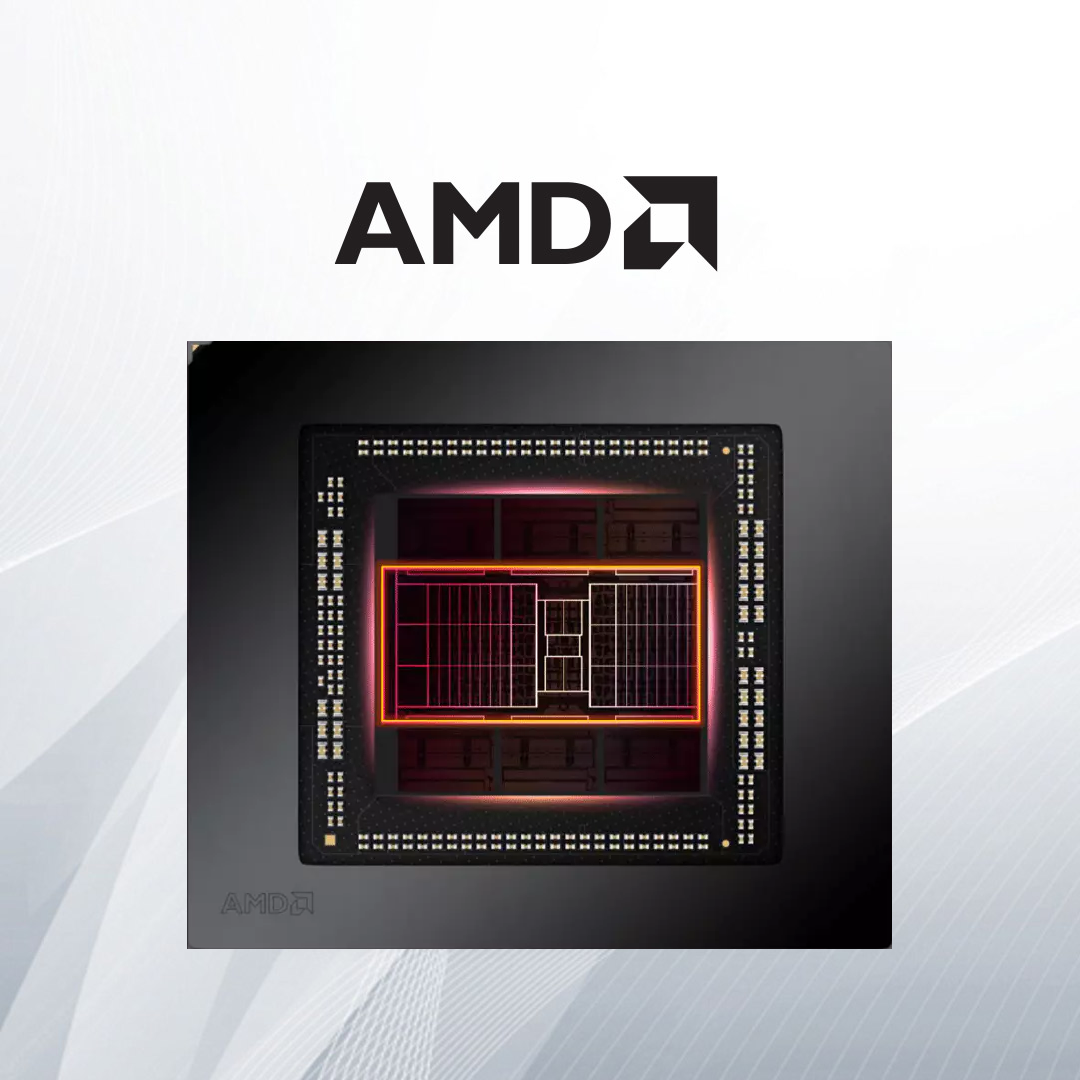
Radeon RX 7900 GRE: The RDNA3 GPU architecture
The Radeon RX 7900 GRE is based on the Navi 31 graphics chip, which consists of 58 billion transistors. The total of 5,120 streaming processors (shader units) are grouped into 80 compute units (CUs), each containing 64 shaders. In addition to the 64 shaders, each CU includes a "Ray Accelerator" for hardware-based ray tracing, resulting in a total of 80. These also contribute to more efficient ray tracing in supported games.
With the new chiplet design, AMD increases transistor density by 165 per cent. This enables either higher clock speeds at the same power consumption or lower power consumption at the same clock speed. Here, AMD has increased the clock speed while keeping the power consumption at 260 watts, below the predecessor's level.
In games, the GPU typically runs at an average game clock of 1,880 MHz. Under particularly high graphical demands, it can boost up to 2,250 MHz.
Infinity Cache & Video Memory
Like its predecessor, the RDNA3 architecture includes AMD's Infinity Cache, which is set at 64 MB. The Infinity Cache enables an effective memory bandwidth increase by a factor of 3.25. With a 256-bit memory interface and an effective memory clock of 18,000 MHz, this results in a total memory bandwidth of 567 GB/s. This increased bandwidth is particularly beneficial for WQHD gaming.
AMD uses the GDDR6 standard with a capacity of 16 GB for the Navi 31 graphics cards. Thanks to the aforementioned Infinity Cache, the overall performance is comparable to that of faster GDDR6X memory. This allows AMD to deliver a powerful combination of high speed and large capacity on the graphics card without resorting to the more expensive memory type.
Smart Access Memory
With Smart Access Memory (SAM) technology, AMD promises additional performance when pairing a Radeon RX 7000 graphics card with a Ryzen 5000 or newer processor on an X570 or X670 motherboard. SAM utilises the PCIe standard's "Resizable BAR" function. A compatible gaming system can benefit from a slight performance boost, though the exact increase depends on the game and selected resolution.
Additional Features
The RDNA3 GPU architecture includes various smaller optimisations, such as:
- DisplayPort 2.1 and HDMI 2.1 for WQHD gaming at 120 Hz or higher
- Variable Rate Shading (DirectX 12 Ultimate)
- Mesh Shader (DirectX 12 Ultimate)
- Sampler Feedback (DirectX 12 Ultimate)
- AV1 decoding (8K30, 4K60)
- H264 & H.265 decoding/encoding
Ray Tracing & FidelityFX
With its Ray Accelerators, AMD offers hardware-based ray tracing. Ray tracing (Microsoft DirectX 12 DXR) enables realistic lighting by simulating the physical properties and behaviour of light. Ray tracing calculates the colour of individual pixels based on the path light takes through a 3D scene.
As light moves through a 3D environment, it is reflected by objects, creating reflections, shadows, and transparent or semi-transparent objects, leading to refractions and distortions. All these effects combine to determine the final colour of a pixel displayed on the monitor.
As a relatively new technology, ray tracing places high demands on hardware. With FidelityFX, AMD implements a super-resolution technology to ease the load on ray tracing accelerators.
Gaming Technologies
Alongside its graphics card hardware, AMD provides gaming technologies designed to enhance the experience for PC gamers. Supported features include:
- Maximum performance with Radeon Adrenalin software
- AMD Radeon Anti-Lag
- AMD Radeon Boost
- AMD FreeSync (4K@240Hz, 8K@60Hz)
- Supports HDMI 2.1 VRR
Buy the best AMD Radeon RX 7900 GRE graphics cards
We offer gaming graphics cards featuring the Radeon RX 7900 GRE GPU from the following manufacturers:
Nothing found...
Unfortunately, we have not found anything.
Try a different search term or category: RTX 5090 , RX 9070 , Gaming PC , Ryzen 9 , Moza
Your Caseking team
Learn some of our tips for a perfect search:
- Check the text you entered for errors
- Try to use related words for your search term
- Refine your search by selecting a few categories as a filter to get to the result you want