CPUs – High-Performance Processors for Every Gaming PC
The CPU is one of the key components responsible for your PC's overall performance. We offer a wide range of desktop processors. Within the dominant x86 architecture used in gaming PCs and workstations, two manufacturers lead the market: AMD and Intel.
Both brands offer processors across a variety of price ranges. The best CPU for you depends on your intended use case and budget.
Which CPU Is the Best?
Looking for the best CPU? Then it's important to know exactly what you'll be using it for. Different applications place different types and levels of demands on your processor.
Some programs primarily rely on strong single-core performance and gain little benefit from a large number of physical or virtual CPU cores. Other software is heavily multi-threaded and can efficiently utilize all available cores simultaneously. As a result, a specific processor may be the better choice depending on the application and software version.
As a general rule for both AMD and Intel processors: the higher the number within a product family, the more CPU cores, L2 and L3 cache, and multi-core performance you can expect.
How to Estimate CPU Performance by Product Name

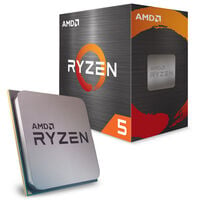
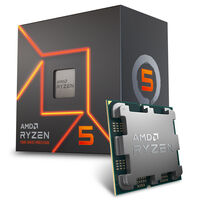
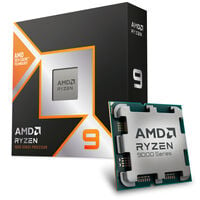
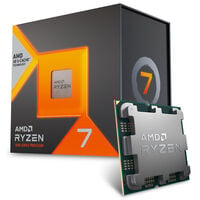
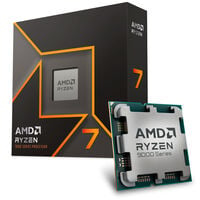
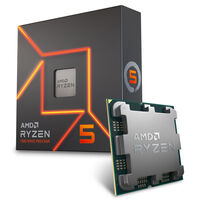
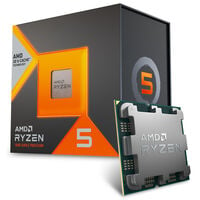
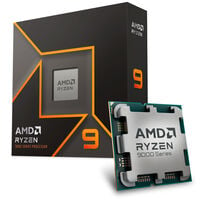
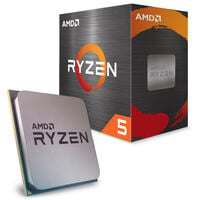
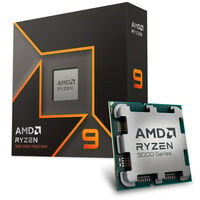
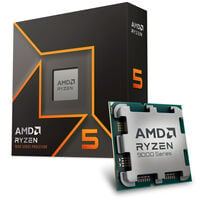
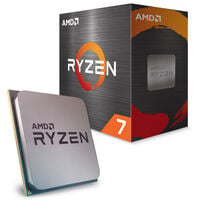
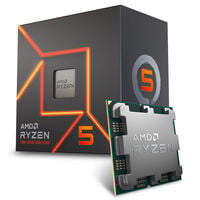
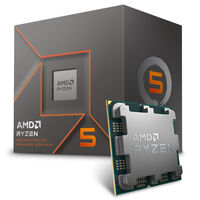
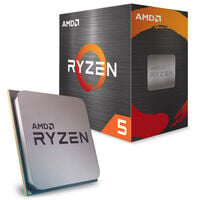
AMD Ryzen processors are divided into the following product families: Ryzen 3, Ryzen 5, Ryzen 7, and Ryzen 9. Ryzen 3 models offer the fewest cores, while Ryzen 9 CPUs offer the highest core counts. The generation can be identified by the first digit of the four-digit model number. For example, a Ryzen 9 5950X belongs to the Ryzen 5000 generation, while a Ryzen 9 9950X belongs to the Ryzen 9000 generation.
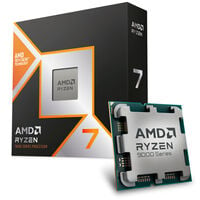
AMD also offers Ryzen X3D processors. Their innovative 3D V-Cache technology increases available cache capacity, allowing the processor to store and access data more efficiently. This results in significantly improved performance across a variety of workloads. Gamers in particular benefit from higher frame rates and smoother gameplay.
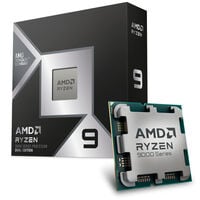
As the next evolution of this technology, AMD now offers Ryzen X3D2 processors featuring dual 3D V-Cache.
AMD CPUs
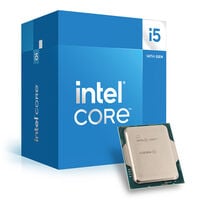
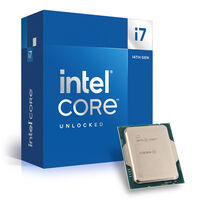
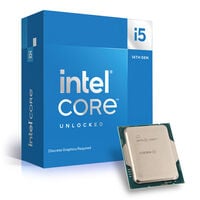
Intel Core processors are divided into the following product lines: Core i3, Core i5, Core i7, and Core i9. Core i3 CPUs feature the fewest cores, while Core i9 models offer the highest core counts. The generation can be identified by the first digit of the five-digit model number. For example, a Core i9-12900K belongs to Intel's 12th generation, while a Core i9-14900K belongs to the 14th generation.
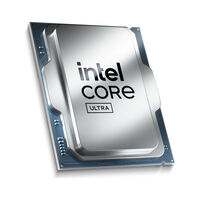
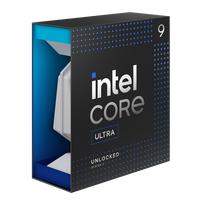
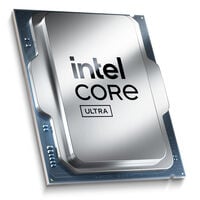
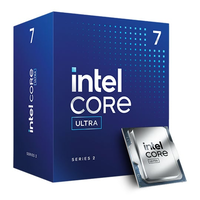
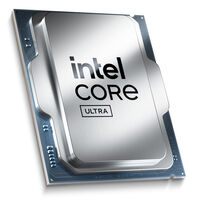
Intel also offers the Core Ultra series, including Core Ultra 5, Core Ultra 7, and Core Ultra 9. As with the Core i series, Core Ultra 5 processors feature fewer cores while Core Ultra 9 models offer the most. The first digit of the model number indicates the generation. For example, an Intel Core Ultra 7 265KF belongs to the second generation of Core Ultra processors.
Intel CPUs
Which Is Better for Gaming – AMD Ryzen or Intel Core CPUs?
With the latest generations, AMD Ryzen 9000 (Zen 5 – Granite Ridge) and Intel Core Ultra 200 (Arrow Lake), it's possible to build extremely powerful gaming PCs at every price point. However, the current top gaming CPU is the Ryzen 7 9850X3D, closely followed by the Ryzen 7 9800X3D.
The Best CPU for Professional Applications
For professional workloads such as video editing, AI applications, and similar tasks, CPUs with at least eight cores are recommended. Users looking for uncompromising performance should consider a Ryzen 9 or Intel Core Ultra 9 processor, including the Ryzen 9 9950X3D2 with dual 3D V-Cache.
What's More Important – GPU or CPU?
The performance of your graphics card and processor should be well balanced. If one component limits the other, a bottleneck occurs, preventing the system from reaching its full potential. When a fast graphics card is held back by the processor, this is known as a CPU bottleneck.
Memory: Which RAM Works with My CPU?
AMD uses DDR4 memory for Ryzen 5000 (Vermeer) processors and DDR5 memory for Ryzen 7000 (Raphael) and Ryzen 9000 (Zen 5) processors. Intel's 12th Generation (Alder Lake) and 13th & 14th Generation (Raptor Lake) CPUs support both DDR4 and DDR5, depending on motherboard compatibility. The latest Intel Core 200 processors support DDR5 memory exclusively.
CPU Overclocking: Maximizing Processor Performance
Overclocking involves increasing the processor's factory-defined clock speeds through BIOS/UEFI settings or software tools to achieve higher performance. Certain AMD and Intel processors feature an unlocked multiplier, allowing overclocking without modifying the base clock (FSB), which would also affect other system components.
Most modern AMD Ryzen processors feature unlocked multipliers. Intel CPUs with unlocked multipliers can be identified by the "K" suffix, or by an "X" suffix on older generations.
You will also need a motherboard chipset that supports overclocking (Intel Z-series and older X-series chipsets such as Z890, as well as AMD B-series and X-series chipsets such as X870E, X870, B850E, and B850). However, overclocking is technically possible on some other motherboards as well, even if they are not specifically designed for it.
FAQ – CPUs
What is a processor (CPU) and what does it do?
The processor, also known as the CPU (Central Processing Unit), is the computational core of your PC. It executes programs, manages system operations, and plays a critical role in overall system performance.
What should I consider when buying a CPU?
Key factors include core count, clock speed, motherboard compatibility (socket type), and your intended workload, whether that's gaming, office tasks, or professional applications.
What is multithreading and why is it important?
Multithreading allows a processor core to handle multiple tasks simultaneously. For many modern applications and games, this improves resource utilization and overall performance.
How important is clock speed for a CPU?
Clock speed (measured in GHz) indicates how quickly a processor core can process data. Higher clock speeds often mean better performance, but only when combined with an appropriate core count and modern architecture.
What is the difference between boxed and tray processors?
Boxed processors are retail products and usually include a standard CPU cooler. Tray CPUs are intended for system integrators, are typically sold in bulk, and often do not include a cooler.
What cooling solution do I need for my processor?
This depends on the CPU's TDP (Thermal Design Power). Many processors run perfectly well with an air cooler, while higher-performance models may benefit from liquid cooling. Always ensure that the cooler is compatible with your CPU socket and provides sufficient cooling capacity.
How important is the CPU for gaming?
Every game requires a CPU to function. However, the extent to which CPU performance affects gaming performance varies significantly from game to game.
How many CPU cores do games need?
Most modern games typically utilize between six and eight CPU cores.