


RDIMM RAM
ECC RDIMM memory provides enhanced reliability and stability for professional applications. Thanks to ECC, memory errors are automatically detected and corrected.
4 Results
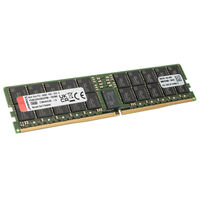
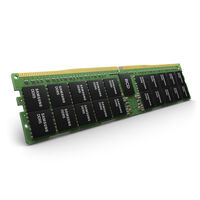
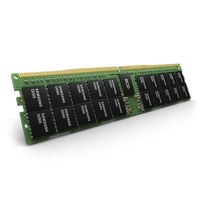
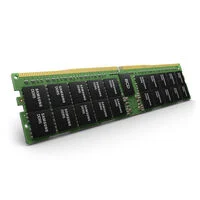
RDIMM RAM
RDIMM RAM consists of specialised memory modules designed for servers and professional workstations. Find the right RDIMM memory for your demanding professional workloads.
What Is RDIMM and What Are Its Benefits?
RDIMM memory is designed for servers and professional workstations that require high memory capacities and stable operation with multiple RAM modules. The "R" stands for Registered.
- Integrated Register: A register chip sits between the CPU's memory controller and the DRAM chips.
- Reduced Memory Controller Load: The register buffers control signals, reducing the electrical load on the memory controller.
- Higher Memory Capacities: This allows systems to support more memory modules and greater overall memory capacities.
- Excellent Stability: RDIMM is particularly well suited for servers and workstations that must operate reliably with fully populated memory banks.
RDIMM RAM Compatibility
Whether an RDIMM module is compatible depends on the CPU, motherboard, BIOS, and supported memory configuration. All components must explicitly support Registered DIMM memory. RDIMM must not be mixed with UDIMM or LRDIMM modules, and DDR4 and DDR5 memory are neither mechanically nor electrically compatible. For maximum stability and memory bandwidth, it is recommended to install identical modules that are approved for your specific platform.
Which CPUs Support RDIMM?
The table below shows which CPU platforms support RDIMM memory.
| CPU Series | Compatible Motherboard Platform | Supported RDIMM Type |
|---|---|---|
| AMD EPYC 9005 | SP5 server motherboards | DDR5 ECC RDIMM |
| AMD Ryzen Threadripper 9000 | TRX50 motherboards | DDR5 ECC RDIMM |
| AMD Ryzen Threadripper PRO 9000 WX | WRX90 motherboards | DDR5 ECC RDIMM |
| Intel Xeon w | W790 motherboards | DDR5 ECC RDIMM |
| Intel Xeon 6 | Xeon 6 server motherboards | DDR5 ECC RDIMM |
Before purchasing, check the QVL (Qualified Vendor List) provided by the motherboard or system manufacturer. It lists RDIMM modules that have been validated for the platform. While a memory module does not have to appear on the QVL to work correctly, validated modules provide greater confidence in terms of compatibility, stability, supported capacity, and memory speed.
Typical Applications for RDIMM RAM
Servers & Data Centres
RDIMM RAM is a widely used choice for servers and data centres. High memory capacities, ECC support, and outstanding stability make it ideal for continuous 24/7 operation.
Professional Workstations
CAD, 3D rendering, simulation, and video editing benefit from large memory capacities and reliable memory performance during demanding workloads.
Virtualization & Databases
Virtualization platforms and database servers require substantial amounts of memory. RDIMM supports high-capacity memory configurations while ensuring reliable long-term operation.
AI & Scientific Computing
For machine learning, AI applications, and scientific computing, RDIMM RAM enables the processing of large datasets and supports professional workstation and server platforms.
LRDIMM and MRDIMM
In addition to standard RDIMM modules, LRDIMM (Load-Reduced DIMM) and MRDIMM (Multiplexed Rank DIMM) are also available. LRDIMM reduces the electrical load on the memory controller, allowing compatible server platforms to support even larger memory capacities. MRDIMM is designed to deliver exceptionally high memory bandwidth and is used on selected modern server platforms. Neither memory type is interchangeable with standard RDIMM modules and should only be used if explicitly supported by both the CPU and motherboard.
FAQ – RDIMM RAM
What Is RDIMM RAM?
RDIMM stands for Registered DIMM. Unlike UDIMM memory, RDIMM features a register between the CPU's memory controller and the DRAM chips. This reduces the load on the memory controller and improves stability in systems equipped with multiple memory modules.
Does RDIMM RAM Always Include ECC?
Most RDIMM modules support ECC (Error Correction Code), allowing memory errors to be detected and corrected. However, not all ECC memory is automatically RDIMM, as ECC UDIMM modules are also available.
Can I Use RDIMM and UDIMM Together?
No. RDIMM and UDIMM memory must not be combined in the same system. Motherboards and CPUs generally support only one of these memory types.
Which CPUs Support RDIMM RAM?
RDIMM is mainly supported by professional platforms such as AMD EPYC, AMD Ryzen Threadripper, and Intel Xeon. Consumer platforms such as AMD Ryzen, Intel Core, and Intel Core Ultra generally do not support Registered DIMM memory.
Can I Use RDIMM RAM in a Gaming PC?
In most cases, no. Conventional gaming PCs based on AMD Ryzen, Intel Core, or Intel Core Ultra platforms do not support RDIMM modules. RDIMM memory is designed for servers and professional workstations.
Can I Combine DDR4 and DDR5 RDIMM Modules?
No. DDR4 and DDR5 RDIMM use different memory standards and are neither mechanically nor electrically compatible. A motherboard and CPU platform support only one of the two standards.