🎁 Sign up for the newsletter and get a €5 voucher after confirmation (minimum order value €75) + 3 days of exclusive early access to the Black Friday deals. Get €5 now🎁 Sign up and get a €5 voucher after confirmation (min. €75 order value) + 3 days of Black Friday early access. Get €5 now
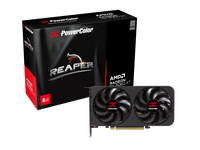
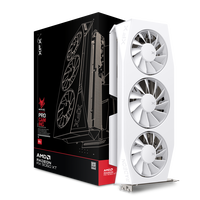
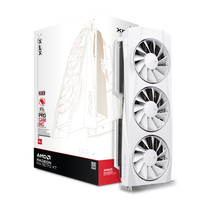
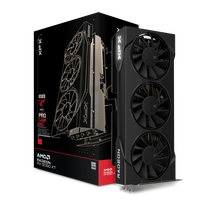
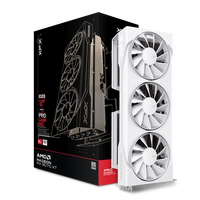
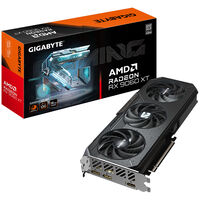
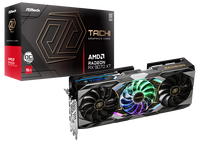
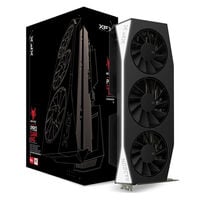
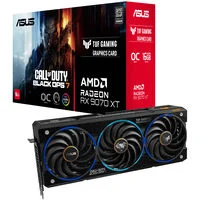
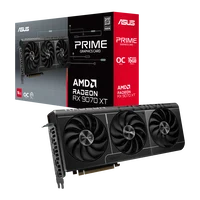
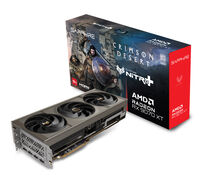
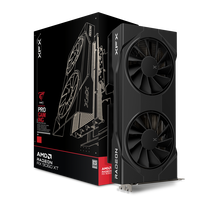
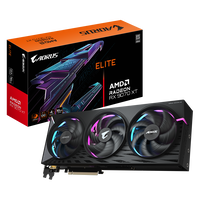
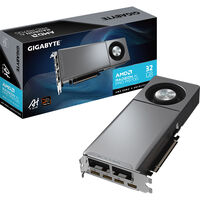
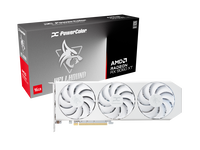
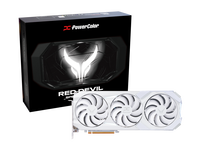
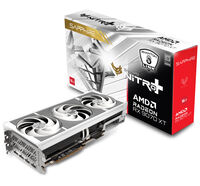
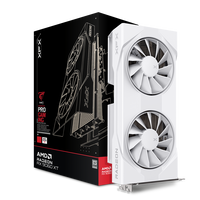
The graphics cards of the AMD Radeon RX 9000 series are your gateway to high-resolution gaming. The new RDNA 4 architecture delivers enhanced ray tracing technology and, for the first time, AI-powered FSR 4, which is exclusively supported by AMD’s latest GPUs. As video memory, the well-established 16 GB GDDR6 VRAM is used, significantly boosted by the 64 MB Infinity Cache for increased performance.
The RX 9000 graphics cards are perfect for anyone looking for strong performance at an unbeatable price. This ensures you're well-equipped for both current and future games!
RDNA 4 Architecture: Optimized Gaming Performance for the Upper Mid-Range
The RX 9070 XT variant of AMD’s new GPUs features the RDNA 4 architecture with the Navi 48 graphics chip. A total of 64 third-generation ray tracing cores deliver highly realistic lighting, shadow, and reflection effects that draw you into the action. The GPU runs at a base clock of 2,400 MHz and can boost up to 2,970 MHz.
The more affordable RX 9070 model also features a Navi 48 chip with 56 ray tracing cores. The graphics card runs at a base clock of 2,070 MHz and reaches boost clock speeds of up to 2,540 MHz.
AMD Radeon RX 9000 Series: Technical Specifications at a Glance
The following table shows the key specifications of the RX 9000 series models.
More Performance Through the Combination of Graphics Memory and Infinity Cache
AMD once again uses established GDDR6 graphics memory with capacities of up to 16 GB in its new graphics cards. However, Infinity Cache significantly improves performance, making the AMD GPUs suitable for demanding games. The 64 MB Infinity Cache and 256-bit memory interface work together to provide increased memory bandwidth. This technology allows AMD to use a more affordable memory type while still achieving performance comparable to GDDR6X graphics memory.
Additional AMD Radeon RX 9000 Features
The RX 9000 series graphics cards also support the following technologies:
The launch of the Radeon RX 9000 series also introduced FSR 4. This technology increases frame rates in games, allowing you to enjoy high frame rates even with less powerful hardware. A neural network is also used to achieve these higher frame rates. In 2026, FSR 4 Redstone will introduce a range of improvements and additional features. FSR 4 has also recently become compatible with RX 7000 graphics cards, with RX 6000 GPUs set to follow next year.
But how exactly does FSR 3 differ from FSR 4? FSR 3 and FSR 4 differ fundamentally in how they work. FSR 3 uses a technique known as temporal accumulation, which uses data from previous frames to reconstruct fine details and edges. An adaptive sharpening filter is then applied to enhance details. The AI component of FidelityFX Super Resolution 4 replaces this technique, delivering even more detail and reducing the appearance of artifacts.
AMD Anti-Lag 2 Technology for Lower Input Latency
FSR 4 is not the only technology that improves your gaming experience—Anti-Lag 2 does as well. Precise and responsive inputs, particularly in first-person shooters, are only possible when latency is kept as low as possible. That is exactly what Anti-Lag 2 is designed to achieve. The technology improves synchronization between the GPU and CPU, reducing the delay between user input via mouse or keyboard and the resulting action displayed on the screen.
Streaming and Content Creation with AMD Radeon RX 9000 Graphics Cards
The new generation of AMD graphics cards features improved and expanded functionality for streamers and content creators. The RX 9000 series supports AV1, which requires less bandwidth when processing video while still delivering high-resolution quality—ideal for streaming on Twitch or YouTube.
Smart Access Memory (SAM)
AMD Smart Access Memory (SAM) can provide additional performance when a compatible Radeon graphics card is paired with a Ryzen CPU. This feature allows the processor to access the GPU’s entire graphics memory, reducing memory access limitations. SAM is based on Resizable BAR technology and can noticeably improve performance in certain games.
FAQ – AMD Radeon RX 9000 Series
Which Graphics Cards Are Part of the AMD Radeon RX 9000 Series?
The AMD Radeon RX 9000 series includes the Radeon RX 9070 XT, RX 9070, RX 9070 GRE, and RX 9060 XT with either 8 or 16 GB of graphics memory. The models are based on the RDNA 4 architecture and differ primarily in compute performance, graphics memory, memory interface, and power consumption.
What Is the Difference Between the RX 9070 XT and RX 9070?
The RX 9070 XT is the more powerful model. It features 64 Compute Units or Ray Accelerators and reaches boost clock speeds of up to 2,970 MHz. The RX 9070 has 56 Compute Units or Ray Accelerators and reaches boost clock speeds of up to 2,540 MHz. Both graphics cards offer 16 GB of GDDR6 memory and a 256-bit memory interface.
Where Does the Radeon RX 9070 GRE Fit Within the Series?
The RX 9070 GRE is positioned below the RX 9070. It features 48 Compute Units or Ray Accelerators, 12 GB of GDDR6 memory, and a 192-bit memory interface. Its base clock is 2,220 MHz, while the boost clock reaches up to 2,790 MHz.
What Advantages Does the RDNA 4 Architecture Offer?
The RDNA 4 architecture was developed to deliver high gaming performance, improved ray tracing effects, and AI-assisted graphics features. The third generation of ray tracing accelerators enables more realistic lighting, shadow, and reflection effects in supported games.
What Is AMD FidelityFX Super Resolution 4?
AMD FidelityFX Super Resolution 4, or FSR 4, uses machine learning to upscale games from a lower internal resolution. This can deliver higher frame rates while preserving fine details, edges, and temporal image stability as effectively as possible.
How Does FSR 4 Differ from FSR 3?
FSR 3 primarily uses image information from previous frames for upscaling and also supports Frame Generation. FSR 4 uses an AI-based method for image reconstruction. This is intended to improve the rendering of fine details and reduce distracting visual artifacts such as flickering or ghosting.
What Does AMD Radeon Anti-Lag 2 Do?
AMD Radeon Anti-Lag 2 reduces the delay between an input made with a mouse or keyboard and the visible response on the screen. It achieves this by improving coordination between CPU and GPU processing. However, the feature must be supported by the individual game.
Are RX 9000 Graphics Cards Suitable for Streaming and Content Creation?
Yes. The graphics cards support AV1 video encoding and decoding, among other features. This modern codec provides high image quality while using bandwidth efficiently, making it suitable for livestreaming, video recording, and editing high-resolution content.
Which Ports and Graphics Standards Does the RX 9000 Series Support?
AMD Radeon RX 9000 series graphics cards support DisplayPort 2.1b, HDMI 2.1a, AMD FreeSync, DirectX 12 Ultimate, OpenGL 4.6, AV1 encoding, and AV1 decoding, among other technologies. The available ports may vary depending on the graphics card manufacturer and model.
What Is AMD Smart Access Memory?
AMD Smart Access Memory, or SAM, is based on Resizable BAR technology. With a compatible combination of Radeon graphics card, processor, and motherboard, the CPU can access the GPU’s entire graphics memory. This can optimize memory access and provide additional performance gains in some games.
Remove product?
Are you sure you want to remove the following product from the basket?