


Microphones
Discover our microphones with XLR or USB connectivity. Ideal for gaming, podcasting, streaming, and more.
8 Results
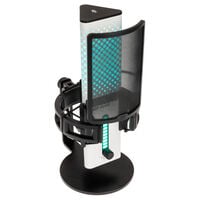
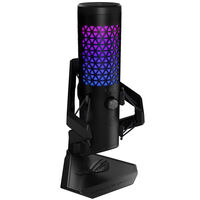
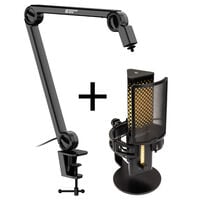
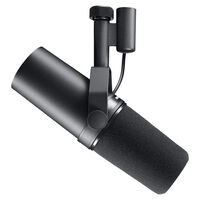
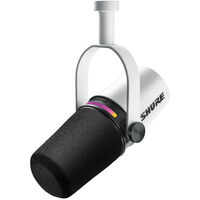
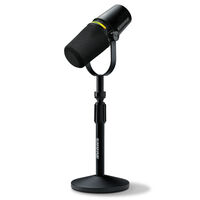
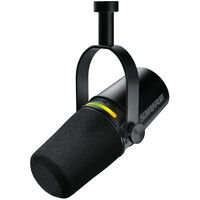
Microphones for Gamers and Content Creators
Whether for gaming, streaming, or content creation, a high-quality microphone captures your voice and ensures that you can be heard clearly. Models are available with different connection types and polar patterns, making it easy to find the right microphone for your intended use.
How Do Microphone Polar Patterns Differ?
A polar pattern describes how sensitive a microphone is to sound coming from different directions. Different polar patterns are suitable for different recording situations.
| Polar Pattern | Pickup Area | Typical Use |
|---|---|---|
| Cardioid | Primarily picks up sound from the front, with reduced sensitivity at the sides and strong attenuation from the rear | Streaming, gaming, podcasts, and vocals |
| Supercardioid | Narrower pickup area at the front, with slight sensitivity at the rear | Noisy environments, stage use, and focused voice recordings |
| Hypercardioid | Even narrower pickup area at the front, with somewhat higher sensitivity at the rear | Highly focused recordings with precise microphone positioning |
| Omnidirectional | Picks up sound almost evenly from all directions | Group discussions, room ambience, and recordings with multiple people |
| Figure-8 | Picks up sound from the front and rear while strongly attenuating sound from the sides | Interviews with two people facing each other and duets |
Some microphones offer multiple polar patterns that you can switch between as needed.
Types of Microphones at a Glance
USB Microphones
USB microphones can be connected directly to a USB port on a PC or laptop and are ready to use straight away. They are a simple solution for gaming setups and streaming when additional equipment is not desired or practical.
XLR Microphones
XLR microphones are connected to a dedicated audio interface or mixing console. Setup is more involved, but this provides more features and adjustment options as well as the ability to use multiple microphones at the same time. For more advanced podcasting or streaming setups, they are often the better choice.
What Else Should You Consider When Buying a Microphone?
When buying a microphone, the most important factor is that it suits your intended use. For gaming, streaming, and podcasts, a 48 kHz sample rate and 24-bit depth are a sensible standard. The specified frequency range indicates which low and high frequencies the microphone can capture. However, a balanced frequency response that reproduces voices clearly and naturally is more important than simply having the widest possible range.
Condenser vs. Dynamic Microphones
Condenser Microphones
Condenser microphones capture voices, vocals, and instruments in particularly fine detail. Due to their high sensitivity, however, they also pick up more room reverb, keyboard noise, and other background sounds. They are therefore particularly suitable for streaming, podcasts, and recordings in quiet environments.
Dynamic Microphones
Dynamic microphones are less sensitive and mainly pick up sound from shorter distances. As a result, less room and background noise often enters the recording. They are particularly suitable for gaming, streaming, podcasts, and voice recordings in rooms that are not acoustically optimized.
FAQ – Microphones
Which Microphone Is Suitable for Gaming and Streaming?
A microphone with a cardioid polar pattern is usually a good choice for gaming and streaming because it primarily captures your voice from the front while reducing sound from behind. USB microphones are particularly easy to set up, while XLR microphones offer more options for expanding your setup.
What Is the Difference Between USB and XLR Microphones?
USB microphones connect directly to a PC or laptop and usually do not require additional equipment. XLR microphones connect via an audio interface or mixing console and are particularly suitable for expandable streaming, podcasting, and recording setups.
Is a Condenser or Dynamic Microphone Better?
Condenser microphones capture voices in particularly fine detail but also pick up more room reverb and background noise. Dynamic microphones are less sensitive and are therefore often better suited to louder rooms or spaces that are not acoustically optimized.
How Can I Reduce Keyboard and Background Noise?
Position the microphone as close to your mouth as practical and point its front toward you. A cardioid polar pattern, properly adjusted gain, and suitable placement of the keyboard and PC can help reduce unwanted background noise.